




The summer of 2026 will witness a landmark event in the annals of international football: the FIFA World Cup 26™. This tournament is not merely another iteration of the world’s most prestigious sporting competition; it is a bold reimagining of its very structure and scale. For the first time in history, the FIFA World Cup will expand to include 48 national teams, a significant leap from the 32-team format that has been in place since 1998. Furthermore, the logistical and cultural tapestry of the event will be woven across three host nations—Canada, Mexico, and the United States—creating an unprecedented continental festival of football. This comprehensive guide delves into every facet of the FIFA World Cup 2026, from its groundbreaking format and intricate schedule to the qualified teams and the iconic stadiums that will serve as their battlegrounds. Whether you are a seasoned football analyst or a passionate fan planning your trip, this resource provides the expert-level detail and clarity needed to navigate the complexities and excitement of this historic tournament.
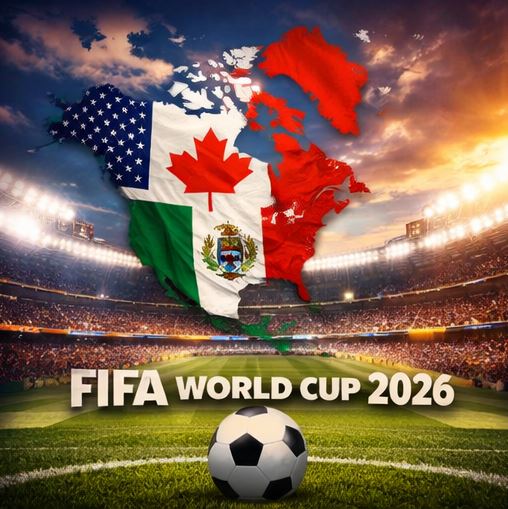
- A Historic First: The Tri-Nation Host
- The Evolution of the Tournament: From 32 to 48 Teams
- Decoding the New Format
- FIFA World Cup 2026 Schedule: A Day-by-Day Journey
- The Qualified Nations: A Global Mosaic
- Host Cities and Iconic Stadiums
- The Road to the Final: What It Takes to be Crowned Champion
- Economic and Cultural Impact
- How to Follow the Action: Broadcasting and Digital Platforms
- Conclusion
- FAQ
A Historic First: The Tri-Nation Host
The decision to award the hosting rights for the 2026 FIFA World Cup to a joint bid from Canada, Mexico, and the United States was a watershed moment for the sport. This marks the first time in the tournament’s 96-year history that three nations will share the immense responsibility and privilege of organizing the event. The significance of this tripartite arrangement extends beyond mere logistics. It represents a powerful statement of unity and collaboration in North America, leveraging the unique footballing cultures, infrastructures, and fan bases of each country. The distribution of matches is carefully calibrated to reflect the scale and capabilities of each host. The United States, with its vast network of large-capacity stadiums, will host the majority of the matches, including all games from the quarter-finals onwards. Mexico, a nation with a rich World Cup heritage, will stage 10 matches, including the highly anticipated opening match at the legendary Estadio Azteca in Mexico City. Canada, making its debut as a World Cup host, will welcome fans to two venues for a total of 13 matches, marking a major milestone in the development of the sport within the country. This shared hosting model promises a diverse and dynamic experience for players and spectators alike, offering a tour through distinct footballing landscapes over the course of the tournament.
The Evolution of the Tournament: From 32 to 48 Teams
The expansion of the FIFA World Cup to 48 teams is the most substantial structural change since the tournament’s inception. This move was driven by a dual mandate from FIFA: to enhance global inclusivity and to provide more nations with the opportunity to compete on the world’s biggest sporting stage. The previous 32-team format, while successful, often left powerhouse footballing continents like Africa (CAF) and Asia (AFC) feeling underrepresented. The new allocation of slots directly addresses this imbalance. UEFA (Europe) retains a strong presence with 16 slots, but CAF now receives 9 slots, AFC gets 8, and CONMEBOL (South America) and CONCACAF (the host confederation) are each guaranteed a minimum of 6. Oceania (OFC) finally secures a direct slot, a historic achievement for the region. This expansion is expected to have a profound developmental impact on football worldwide, incentivizing investment in grassroots programs and national team infrastructure in countries that previously saw qualification as a distant dream. While some critics have raised concerns about potential dilution of quality in the group stage, the new format is meticulously designed to maintain competitive integrity while celebrating the global reach of the beautiful game.
Decoding the New Format
The 48-team format necessitates a completely new tournament structure, which can be broken down into two main phases: the Group Stage and the Knockout Stage.
Group Stage Mechanics
The 48 qualified teams are drawn into 12 groups of four teams each. Within each group, every team plays one match against each of the other three teams in a round-robin format. This means each team is guaranteed a minimum of three matches during the group stage. The top two teams from each of the 12 groups (24 teams in total) automatically advance to the next phase. To ensure a robust and competitive knockout bracket, the eight best third-placed teams across all groups also progress. This system creates a dynamic where even a team that finishes third in a particularly strong group still has a realistic chance of continuing its World Cup journey, adding an extra layer of intrigue and complexity to the final group matches.
Knockout Stage Structure
The inclusion of 32 teams in the knockout stage (24 group runners-up plus 8 best third-placed teams) leads to a Round of 32 as the first elimination phase. From there, the tournament follows a traditional single-elimination bracket: Round of 16, Quarter-finals, Semi-finals, a Third-Place Playoff, and the Grand Final. This is a significant departure from the previous format, where the Round of 16 was the first knockout round. The new path to the title is more arduous; a team must now win eight matches to be crowned world champion, compared to the seven required under the old 32-team system. This extended journey tests not only a team’s skill and tactics but also its squad depth, resilience, and ability to manage a grueling schedule over 39 days.
Tiebreakers and Fair Play
With so many teams and matches, the possibility of ties in the group standings is high. FIFA has established a clear hierarchy of tiebreakers to determine rankings:
- Points in all group matches
- Goal difference in all group matches
- Number of goals scored in all group matches
- Points in matches between the tied teams
- Goal difference in matches between the tied teams
- Number of goals scored in matches between the tied teams
- Fair play points (based on yellow and red cards)
- Drawing of lots by FIFA
The fair play criterion serves as a reminder that sportsmanship remains a core value of the tournament, even in its most competitive moments.
FIFA World Cup 2026 Schedule: A Day-by-Day Journey
The FIFA World Cup 2026 will run from Thursday, June 11th to Sunday, July 19th, 2026—a total of 39 action-packed days. The tournament is structured into distinct phases, each with its own rhythm and intensity.
Key Dates and Phases
The opening match is scheduled for June 11th, with the host nation Mexico facing its opponent at the Estadio Azteca. The group stage will then unfold over a period of 17 days, concluding on June 27th. Following a brief transition, the Round of 32 will take place from June 28th to July 3rd. The Round of 16 will be played over four days, from July 4th to 7th. After a short break, the quarter-finals are set for July 10th and 11th. The semi-finals will follow on July 14th and 15th. The third-place playoff is scheduled for July 18th, with the grand final to be held on July 19th at MetLife Stadium in East Rutherford, New Jersey.
Rest Days and Tournament Flow
To manage player workload and allow for travel between the geographically dispersed host cities, the schedule includes several official rest days with no matches scheduled. These fall on July 8th, 12th, 13th, 16th, and 17th. This strategic spacing is crucial for maintaining the physical condition of the players and ensuring the highest possible quality of football throughout the tournament, especially in the latter, more demanding stages.
The Qualified Nations: A Global Mosaic
The 48 teams that will descend upon North America represent the pinnacle of their respective confederations. The qualification process was a multi-year odyssey that concluded with a final inter-confederation playoff in March 2026. The host nations—Canada, Mexico, and the United States—qualified automatically, a tradition for World Cup hosts. The remaining 45 spots were fiercely contested across the globe. The new slot allocation has resulted in a more diverse field than ever before. Europe’s traditional powerhouses like France, England, and Germany are joined by a record number of African nations, including reigning champions Senegal and perennial contenders Morocco and Egypt. Asia sends a strong contingent led by Japan and Iran, while South America’s “Big Five” of Argentina, Brazil, Uruguay, Colombia, and Ecuador are all present, along with Peru. The final spot for Oceania was claimed by New Zealand, giving the region its first direct entry into the World Cup finals.
| Confederation | Number of Slots | Example Qualified Teams |
|---|---|---|
| UEFA (Europe) | 16 | France, England, Germany, Italy, Spain, Portugal, Netherlands, Croatia, Belgium, Switzerland, Denmark, Sweden, Turkey, Czechia, Bosnia and Herzegovina, Wales |
| CAF (Africa) | 9 | Morocco, Senegal, Tunisia, Egypt, Algeria, Ghana, Cape Verde, South Africa, Ivory Coast |
| AFC (Asia) | 8 | Japan, Iran, South Korea, Australia, Saudi Arabia, Iraq, Uzbekistan, Qatar |
| CONMEBOL (South America) | 6 | Argentina, Brazil, Uruguay, Colombia, Ecuador, Peru |
| CONCACAF (North/Central America & Caribbean) | 6 | USA, Canada, Mexico, Costa Rica, Jamaica, Honduras |
| OFC (Oceania) | 1 | New Zealand |
Host Cities and Iconic Stadiums
Spanning three countries, the FIFA World Cup 2026 will be played in a record 16 host cities, utilizing the most stadiums ever for a single World Cup. This vast network of venues promises a unique geographical and cultural experience for fans traveling to the event.
The 16 Venues of Glory
The host cities are distributed as follows: eleven in the United States, three in Mexico, and two in Canada. Each stadium has been selected for its capacity, modern facilities, and historical or cultural significance to the sport.
- Vancouver, BC – BC Place
- Toronto, ON – BMO Field
- Mexico City – Estadio Azteca
- Guadalajara – Estadio Akron
- Monterrey – Estadio BBVA
- Atlanta, GA – Mercedes-Benz Stadium
- Boston, MA – Gillette Stadium
- Dallas, TX – AT&T Stadium
- Houston, TX – NRG Stadium
- Kansas City, MO – Arrowhead Stadium
- Los Angeles, CA – SoFi Stadium
- Miami, FL – Hard Rock Stadium
- New York/New Jersey – MetLife Stadium
- Philadelphia, PA – Lincoln Financial Field
- San Francisco Bay Area, CA – Levi’s Stadium
- Seattle, WA – Lumen Field
Logistics and Fan Experience
Navigating between these 16 cities presents both a challenge and an opportunity. For the dedicated fan, it offers a chance to explore the diverse landscapes and cultures of North America. For teams, it demands meticulous planning for travel and acclimatization. FIFA and the local organizing committees have invested heavily in transportation infrastructure and fan zones to ensure a smooth and enjoyable experience for all attendees. The semi-finals are slated for AT&T Stadium in Dallas and Mercedes-Benz Stadium in Atlanta, while the final will be held at the MetLife Stadium in the New York/New Jersey metropolitan area.
The Road to the Final: What It Takes to be Crowned Champion
In the new 48-team era, the path to lifting the coveted FIFA World Cup trophy is longer and more demanding than ever. A team must successfully navigate the group stage and then win five consecutive knockout matches—the Round of 32, Round of 16, Quarter-final, Semi-final, and the Final. This totals eight victories, a significant increase from the seven required in the past. This new reality places a premium on squad depth, as managers will need to rotate players to manage fatigue and avoid injuries over the nearly six-week campaign. Tactical flexibility is also paramount, as teams will face a wider variety of playing styles from different confederations in the early rounds. Historically, World Cup winners have combined individual brilliance with collective discipline and mental fortitude. In 2026, these qualities will be tested more rigorously than ever before.
Economic and Cultural Impact
The FIFA World Cup 26™ is projected to be not just a sporting spectacle but also an economic powerhouse. Early forecasts suggest the tournament could generate a staggering $80.1 billion in global gross output and contribute $40.9 billion to the GDP of North America. It is expected to create approximately 185,000 full-time jobs and attract between 20 to 30 million tourists to the host cities. Beyond the immediate financial windfall, the event is anticipated to leave a lasting legacy. Investments in stadium upgrades, transportation networks, and hospitality infrastructure will benefit the host regions for decades to come. Culturally, the World Cup serves as a massive platform for exchange, bringing together people from every corner of the globe in a shared celebration of sport, fostering mutual understanding and goodwill.
How to Follow the Action: Broadcasting and Digital Platforms
For those unable to attend in person, the entire drama of the FIFA World Cup 2026 will be accessible through a global network of official broadcast partners. Every one of the 104 matches will be televised and streamed live. In addition, FIFA’s official digital platforms, including its website and mobile app, will offer comprehensive coverage, including live scores, detailed statistics, video highlights, and in-depth analysis. This ensures that fans around the world can stay connected to the tournament in real-time, experiencing the goals, the heartbreak, and the ultimate triumph of the world champions from their homes.
Conclusion
The FIFA World Cup 26™ stands as a monumental chapter in the history of football. Its expanded format, tri-national hosting, and record-breaking scale represent a bold vision for the future of the sport—one that is more inclusive, more global, and more ambitious than ever before. As the world turns its attention to North America in June 2026, we will witness not just a contest for a trophy, but a celebration of football’s unifying power on an unprecedented scale. The stage is set, the teams are ready, and the world is waiting. The countdown to a new era has begun.
FAQ
The FIFA World Cup 2026 will run from Thursday, June 11 to Sunday, July 19, 2026. The opening match is scheduled at Estadio Azteca in Mexico City, while the grand final will be held at MetLife Stadium in the New York/New Jersey area.
For the first time in history, the FIFA World Cup 26™ will feature 48 national teams, expanded from the previous 32-team format. This change aims to increase global representation and provide more nations with the opportunity to compete at the highest level.
The 48 teams are divided into 12 groups of four. The top two teams from each group (24 teams) advance to the knockout stage, joined by the eight best third-placed teams. This creates a 32-team knockout bracket starting with a new Round of 32.
The tournament is jointly hosted by three nations: the United States, Canada, and Mexico. This is the first World Cup to be organized by three countries, with matches distributed across 16 host cities throughout North America.
A total of 104 matches will be played during the FIFA World Cup 26™, an increase of 40 matches compared to the 2022 tournament. This includes 72 group stage matches and 32 knockout stage fixtures.
The official FIFA website and mobile app provide the most up-to-date fifa world cup 2026 schedule, including match times, venues, and broadcast information. Local organizing committees in the USA, Canada, and Mexico also publish region-specific schedules.
Teams qualify through their respective continental confederations: UEFA (16 slots), CAF (9), AFC (8), CONMEBOL (6), CONCACAF (6 including hosts), and OFC (1). The host nations—USA, Canada, and Mexico—qualified automatically.
Sixteen venues across North America will host matches, including iconic stadiums like Estadio Azteca (Mexico City), MetLife Stadium (New York/New Jersey), SoFi Stadium (Los Angeles), BC Place (Vancouver), and BMO Field (Toronto).
Official ticket sales are conducted exclusively through FIFA’s official ticketing platform. Registration for ticket alerts and lottery systems is available on the FIFA website. Beware of unauthorized resellers to avoid scams.
While the path to the final is longer (eight wins required instead of seven), the final match itself remains a single 90-minute game, followed by extra time and penalties if necessary. The champion will be decided at MetLife Stadium on July 19, 2026.